How Password-Protected File Sharing Helps Meet Compliance Requirements

Businesses now operate in a landscape where data privacy and security are paramount, making compliance a top priority. Strict regulatory standards bound industries such as healthcare, finance, and legal services require them to manage and share sensitive data with heightened security. Password-protected file sharing is a highly effective approach for safeguarding data, allowing only authorized users to access critical documents. This enables companies to meet rigorous regulatory requirements, safeguard client information, and build trust.
The shift to remote work during COVID-19 accelerated the need for secure digital tools. As remote setups become standard, tools like DropSend have intensified their focus on digital security, prioritizing it more than ever.
Compliance and Data Protection Regulations
Businesses in highly regulated sectors failing to meet data protection standards can face severe fines and penalties. Regulations like GDPR (General Data Protection Regulation), HIPAA (Health Insurance Portability and Accountability Act), and FINRA (Financial Industry Regulatory Authority) require businesses to uphold privacy by implementing strict access controls.
GDPR and Data Security
The GDPR is one of the most influential data protection laws in the European Union. It mandates that businesses store and process data only when there is a legitimate purpose, emphasizing transparency, accountability, and secure data management. Password-protected document sharing aligns with these requirements by offering a controlled method to limit who can access data, thus reducing the chances of unauthorized access.
HIPAA and Patient Confidentiality
In the healthcare sector, HIPAA mandates the protection of patients’ health information. This regulation emphasizes protecting Protected Health Information (PHI) from unauthorized access and requires healthcare providers to secure data at all access points, including during file sharing. A robust password-protected file-sharing system can meet these requirements by limiting access to only those involved in patient care and protecting sensitive information from data breaches or leaks.
FINRA and Financial Data Integrity
Financial institutions must follow FINRA guidelines, ensuring that sensitive financial data remains confidential and is only accessible to authorized personnel. Password-protected file sharing ensures that financial advisors, auditors, and clients have secure access to critical information without compromising data integrity.
Why Password-Protected File Sharing is Essential for Compliance

Adopting data compliance practices enables your organization to uphold industry best practices. While there are several methods to ensure compliance, incorporating password protection as a security layer is essential.
Enhanced access control
Password protection enables businesses to manage who can access specific documents. File access control complies with data protection laws that mandate securing personal information. For added security, multi-factor authentication (MFA) can be implemented, ensuring only verified users can access designated files.
Data encryption for extra security
Encryption plays a vital role in password-protected file sharing, adding an extra layer of security to documents. Encrypted file transfer ensures that data remains unreadable to unauthorized users, significantly lowering the risk of data breaches. Many regulatory frameworks recommend or mandate encryption, making password-protected, encrypted file sharing a highly effective approach for maintaining compliance.
Traceability and audit trails
Regulations such as GDPR and HIPAA mandate that organizations keep records of who accessed data and when. Password-protected file-sharing systems often include built-in audit trails, allowing businesses to track user access and generate reports for compliance audits. This transparency in data access supports accountability and enhances overall data security.
Key Benefits of Password-Protected File Sharing for Business
Implementing password-protected file sharing provides a multitude of benefits that go beyond compliance. Let’s explore them.
Improved data security
One of the primary reasons for password protection is improved data security. With access restricted only to authorized personnel, companies minimize the risk of accidental or intentional data exposure. This approach aligns with regulatory requirements demanding secure storage and sensitive data transmission.
Simplified compliance management
For organizations handling sensitive information across various compliance frameworks, password-secured file sharing offers a simplified approach to compliance. By centralizing file access controls, encryption, and logging, companies can meet multiple regulatory requirements through a single secure system, reducing administrative burdens.
Increased client trust
Clients today are increasingly concerned about how their data is managed and shared. Implementing secure file-sharing through password protection demonstrates a commitment to data protection, helping companies foster trust and confidence among their clients.
Minimized risk of data breaches
Data breaches are only only costly but also damage a business’s reputation. File protection solutions, including password protection, minimize the likelihood of breaches, as unauthorized individuals cannot access sensitive files. By securing client data, businesses can protect themselves from potential litigation and costly fines.
Best Practices for Secure, Compliant File Sharing
To fully leverage password-protected file sharing, businesses must adhere to certain best practices. Below are some key strategies:
Implement multi-factor authentication (MFA)
Multi-factor authentication provides an added layer of security by requiring users to verify their identity through multiple methods before accessing a document. MFA is a crucial step to reduce unauthorized access, ensuring that only verified individuals gain entry to sensitive files.
Regularly update passwords
To maintain security, it is essential to update passwords regularly and enforce strong password policies. Passwords should also include a mix of letters, numbers, and special characters to prevent easy guessing.
Utilize end-to-end encryption
End-to-end encryption ensures that data remains secure while being transmitted between users. It safeguards the content of files from interception, making it an essential feature for password-protected file sharing.
Restricted access based on user roles
By limiting file access based on user roles and permissions, businesses can further control who has access to specific documents. For example, in healthcare, only certain personnel may access PHI, while in finance, certain files may only be accessible by authorized auditors.
Choosing the Right Password-Protected File-Sharing Solution
For businesses to truly benefit from password-protected file sharing, choosing the right solution is critical. Here are factors to consider when selecting a platform.
Compatibility with compliance regulations
Ensure that the secure file-sharing platforms comply with relevant industry standards like GDPR, HIPAA, and FINRA. Platforms that include encryption, audit trails, and access control features are well-suited for regulatory compliance.
Ease of use and accessibility
A secure file-sharing solution should be user-friendly, allowing employees to easily access and share files without compromising security. Platforms that offer intuitive user interfaces and mobile accessibility help employees remain productive while maintaining compliance.
Customizable security features
Different industries have unique security needs. Opt for a file-sharing solution for businesses that provides customizable security features like configurable access controls and flexible password policies.
Real-time monitoring and alerts
For added security, consider a file-sharing tool that includes real-time monitoring and alert notifications. This feature enables companies to receive immediate notification if there are any suspicions of login attempts or unauthorized access, ensuring a proactive approach to data security.
Best Practices for Creating Strong Passwords

Passwords in file-sharing settings are entirely within your control and serve as the first line of defense against unauthorized access. Strong passwords are also under regulations, so following best practices for creating robust and resilient passwords is essential to your organization. Here’s what to consider when using password-protected file sharing.
Use a Mix of Characters: Combine uppercase and lowercase letters, numbers, and special symbols. A mix makes it harder for hackers to guess or crack your passwords.
Make it Long: Aim for at least 12 characters. The longer the password, the stronger it generally is.
Avoid Common Words and Sequences: Don’t use easily guessable information like “password”, “12345”, or your name. Avoid keyboard sequences (eg. “qwerty”) and dates like birthdays.
Create Unique Passwords for Each Account: Using the same password across multiple accounts increases security risks. Creating unique passwords for each account helps prevent security breaches. This practice should be emphasized to remote team members, particularly during onboarding sessions or refresher meetings for long-term employees.
Use Passphrases: Passphrases are sentence-like strings of words used for authentication, offering a longer alternative to traditional passwords. They are easy to remember yet difficult to crack. Using passphrases (eg. “PurpleTiger$Ocean99!) adds complexity while remaining memorable.
Avoid Personal Information: Do not include easily identifiable details like your address, phone number, or other personal info in your passwords.
Consider Using a Password Manager: A password manager can securely generate and store complex passwords, so you only need to remember one master password.
Change Passwords Regularly: Update your passwords periodically, especially for sensitive accounts, to reduce risk.
Test Password Strength: Numerous websites provide tools to assess password strength, helping to ensure it is hard to guess or crack. Some platforms also recommend strong passwords that can be securely stored in a built-in password manager.
Not following these practices makes your passwords more susceptible to being compromised. While shared passwords are sometimes used within organizations, adhering to secure protocols safeguards access against attacks. Additionally, it’s essential to routinely review access logs and offer employee training to ensure everyone on your time is aware of secure practices, proper password management, and potential cyberattack techniques.
Password-Protected File Sharing with DropSend
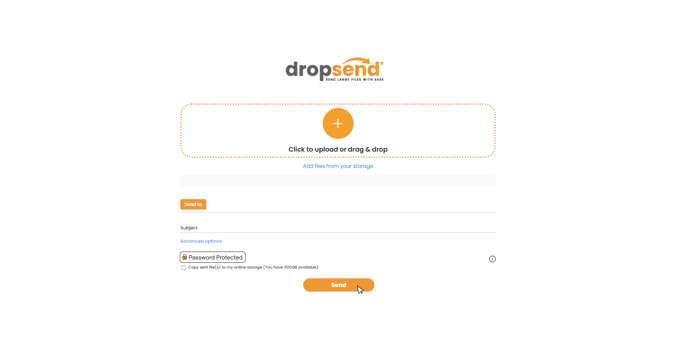
Platforms differ in their compliance with security regulations, and not all services meet the necessary high standards. As a result, finding one that aligns with your industry requirements can be challenging. With additional factors to consider—such as encryption levels, usability, cost, features, scalability, and user management—selecting a password-protected file-sharing platform can become a complex task.
However, with DropSend, a comprehensive solution for large file sharing that prioritizes security, the search for a suitable option becomes much simpler. DropSend enables users to set passwords, file expiration dates, and download limits, enhancing the security of file sharing. It also utilizes robust security protocols to provide additional layers of protection. Most importantly, DropSend complies with security regulations across various industries, ensuring that your organization adheres to regulations and data privacy laws.
Sign up now and secure your files with passwords before transmission. Experience secure file sharing through password protection with DropSend!

